Agree on a mentoring plan with observable practice
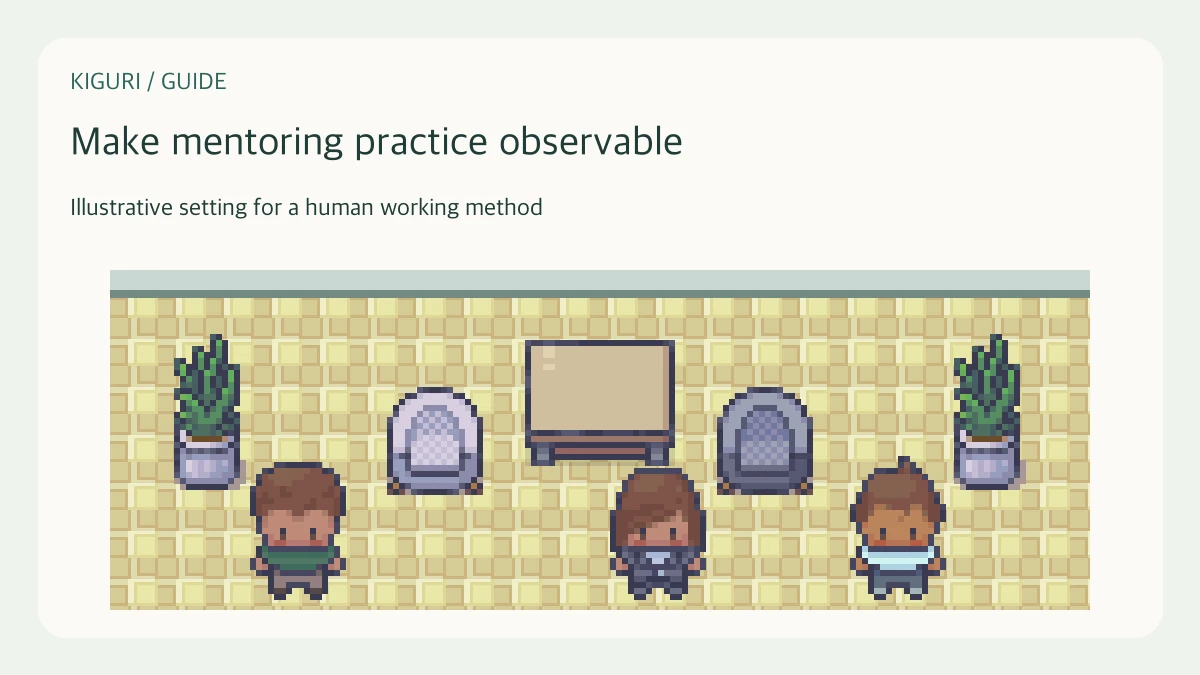
A mentoring arrangement becomes useful when both people can describe what the learner will practice. Start with a task the learner wants to perform more independently, then agree on evidence and feedback boundaries. A virtual office can be a place to talk; the learning plan and practice materials can stay in the tools both people already use.
Turn a broad goal into a task
For this fictional practice example, a learner wants to become better at technical communication. Narrow that goal to preparing a review request another person can act on. The task is to describe the proposed change, its reason, relevant evidence, and the decision requested. It is not to improve every presentation or earn a career rating.
Ask the learner where their current requests become difficult. They might omit the decision they need or include background before the actual question. Choose one difficulty for the first cycle so practice can produce something specific to inspect.
Choose a safe artifact the learner owns
Use an invented change, such as revising the organization of a fictional handbook. The learner writes a first review request without the mentor editing it. Keep the material small enough to discuss in one sitting and exclude confidential project content unless both people are permitted to use it.
The mentor can provide an example of a clear request and explain their reasoning. They should not rewrite the learner's entire draft while calling that learner progress. Keep the first attempt and any later revision separate so the learner can identify which choices they changed.
Agree on feedback limits
Decide what the mentor will review: for example, whether the requested decision is explicit and whether the evidence supports it. Agree whether comments will be written, discussed, or both. Let the learner identify feedback they do not want in this cycle, such as a broad judgment about their speaking style.
Discuss how practice material can be shared and whether either person can pause or revise the arrangement. Mentoring notes are not automatically an employee evaluation. If a manager needs a formal assessment, that is a different process with its own purpose and expectations.
Practice a changed case independently
After feedback, have the learner revise the fictional request and explain the changes. Then give a related case with a different decision: instead of approving a new outline, ask a reviewer to resolve a conflict between two source notes. This checks whether the learner can adapt the structure rather than reproduce the mentor's wording.
Ask the mentor to identify the requested decision without extra explanation. If they cannot, inspect the draft's question and evidence. Avoid adding a score unless both people deliberately chose a suitable assessment method for a separate purpose.
Review the arrangement with the learner
At the agreed review point, compare the independent attempts and the learner's reasoning. Ask which feedback helped, what remains difficult, and whether the next task should be narrower or more challenging. The learner should be able to name the next practice action and retain ownership of it.
A completed conversation does not guarantee promotion, mastery, or a lasting change in performance. A useful plan records one skill, one practice task, feedback boundaries, and the next review. If those details remain vague, refine the arrangement before scheduling an indefinite series of mentoring meetings.