Build office rituals across different time zones
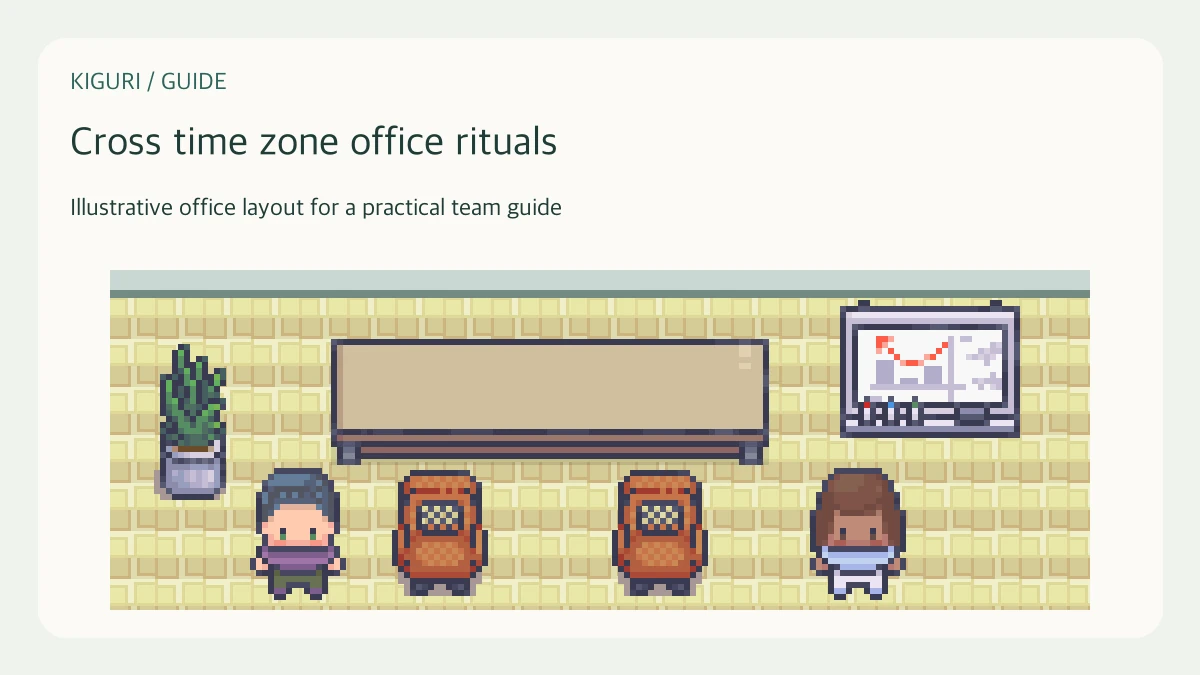
A shared virtual office does not create shared working hours. A recurring event that suits one location may always fall outside another colleague's day. Design rituals around the overlap you actually have, and preserve a useful way to participate without being present at the same moment.
Map the real overlap
Ask teammates for their normal working windows and constraints rather than inferring them from location. Record the relevant time zones. Choose a live window only after comparing those schedules, including changes that occur when daylight saving rules differ.
For example, a team spread across three regions may have a short overlap suitable for a weekly decision session but no reasonable daily gathering. State that limitation openly. More visible office activity is not a reason to expect people to extend their working day.
Assign a purpose to each ritual
Separate activities that need live conversation from information people can read later. A disputed priority may benefit from discussion; a routine progress update often works as a written note. Make the required outcome explicit so attendees know why they are joining.
Keep social gatherings optional when participation would fall outside someone's agreed hours. If the same people repeatedly miss them, offer a different occasion rather than assuming that a recording recreates a social conversation.
Rotate unavoidable inconvenience
When no fair common time exists, rotate the live slot or hold separate sessions with a shared summary. Decide the rotation in advance. Check that the people missing one session can influence decisions before they are finalized.
Rotation spreads inconvenience but adds scheduling complexity. Separate sessions improve access but can produce different conclusions. Use a common decision record and a named owner to reconcile questions; do not let the last meeting silently overwrite the earlier one.
Make the handoff independent of attendance
After a session, write the decision, context, open questions, and response deadline in the team's normal record. Give colleagues enough working time to respond. Specify the deadline with a date and time zone rather than saying tomorrow morning.
Review the arrangement after a schedule change or a new teammate joins. If decisions still happen in conversations that exclude one region, adjust the decision process as well as the calendar. A ritual is useful when it creates reliable coordination, not when everyone appears online together.