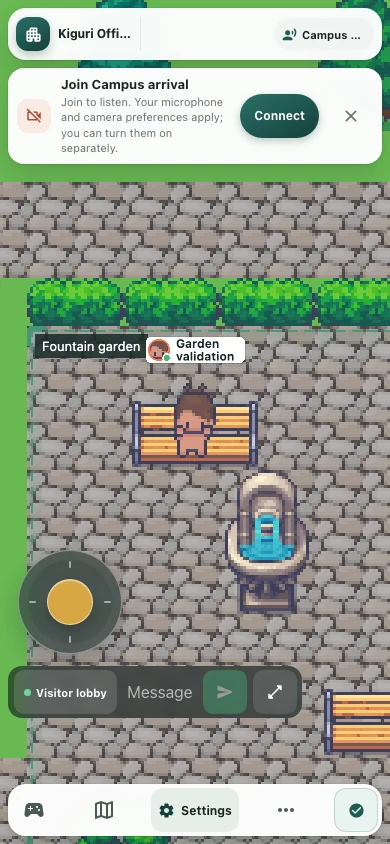
Design a garden break route with a clear way back
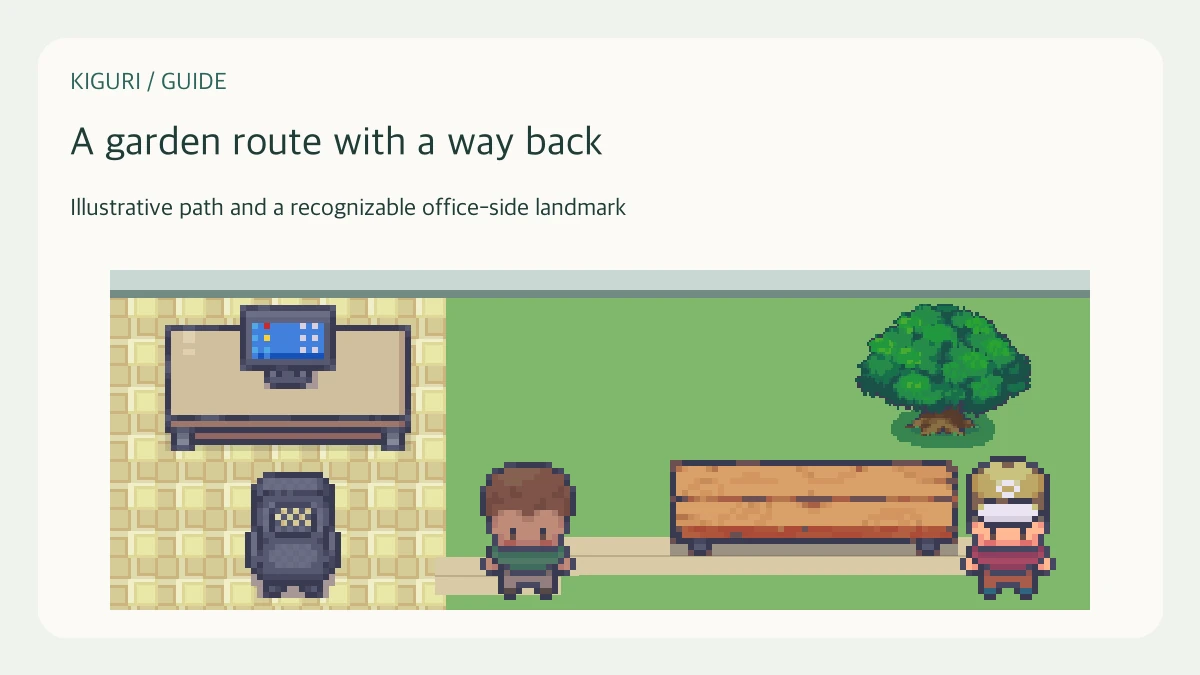
A garden can provide a change of scene between work sessions. The useful design question is how someone reaches a resting spot and returns to work without confusion. Plan the route before placing dense greenery or decorative water. A pleasant overview is only the first part of a usable garden.
Choose the start and stopping point
Imagine a teammate leaving the work area for a short pause on a bench. Identify the garden entry and the intended resting spot. Draw a simple route between them, with enough room to turn near the seat. Avoid placing the bench solely where it balances the screenshot if that position makes its approach difficult to see or reach.
Keep greenery at the edges
Use shrubs, trees, and planters to frame the route rather than occupy its center. Check their complete visual bounds: a tall crown can cover a bench even when the trunk sits beside it. Place the largest elements behind the resting area where possible. Preserve a clear view of the seat, the walking surface, and the direction back to the office.
Treat water as a boundary
If the scene includes a pond or shoreline, decide which edge is meant to be approached and which is scenery. Inspect the transition between land and water so unrelated ground colors do not create an accidental stripe. Do not assume an animated-looking asset actually animates or that a visible shore is walkable. Check the actual map behavior rather than promising either from the picture.
Test approach and departure
Walk to the bench from the entry, then approach from any other route the layout invites. For configured seating, test sitting and getting up; the surrounding plants must not obscure the character or block the exit. If a path ends beside decorative seating, say so honestly. A break area should have a clear stopping point without trapping movement against nearby scenery.
Make the return recognizable
Use a visible landmark near the garden entry and keep it consistent from both directions. Avoid making every bend look identical. Try the route on a smaller screen, where distant landmarks may be outside the camera view. If the return depends on remembering several unseen turns, shorten the route or distinguish one junction with a modest, unobstructed feature.