Document an office recovery copy another editor can identify
An editor prepares a recovery copy before rearranging a reception area. A week later, a different colleague needs it. Several files have similar names, and the original editor is unavailable. A short recovery manifest makes that handoff safer. Its purpose is to identify the right state and the authority to restore it, rather than to explain every checkpoint control again.
Identify the state unambiguously
Record the map identity, the creation date, the intended purpose, and the responsible editor. Choose a descriptive name such as Reception before table move rather than latest. Note whether the copy represents a working shared arrangement or an unfinished draft. Avoid private information in filenames or notes that might be shared with another authorized editor.
Describe the copy and its location
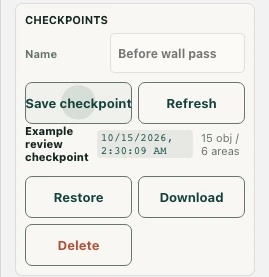
Distinguish a browser checkpoint from a downloaded layout file. Kiguri checkpoints use browser storage, so another editor should not expect an entry on a different computer. Where available, confirm a downloaded recovery file actually exists and record its agreed storage location. A screenshot can help recognize the arrangement, but it does not replace the layout data needed for recovery.
Write the acceptance checks
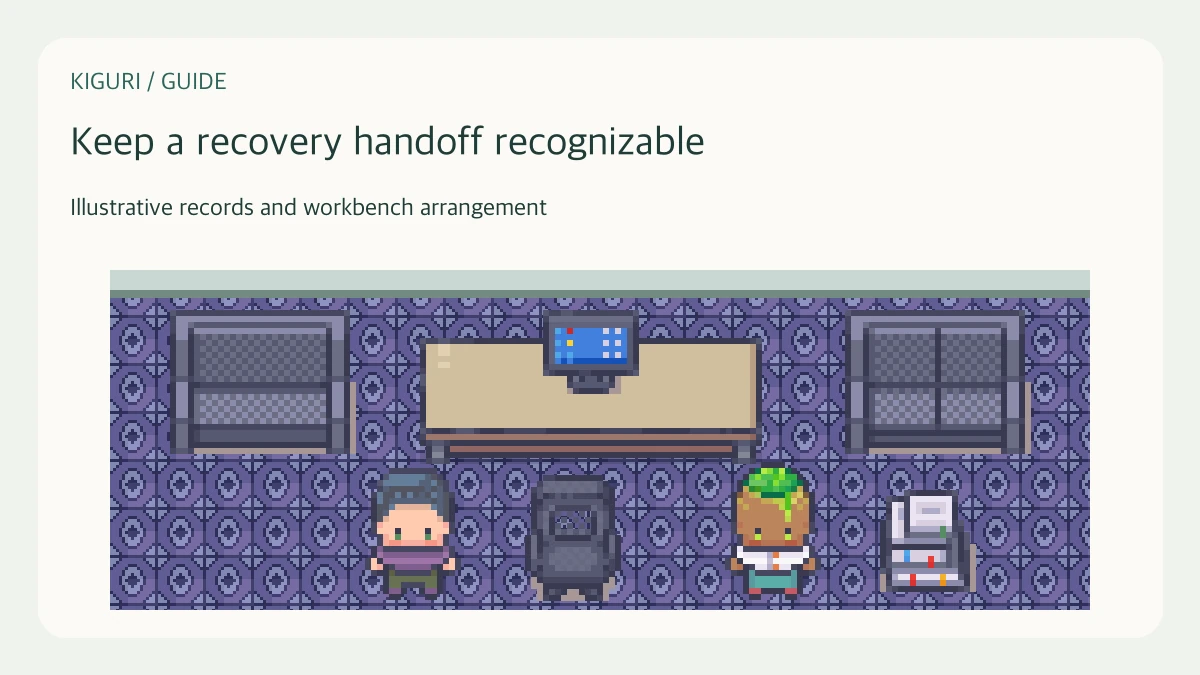
List two or three tasks that should work in the recorded state: enter the reception area, reach the meeting table, and leave through the main passage. Include a small illustration if it helps identify the destinations. Note checks that were not performed. A file's presence is evidence that a copy exists, not that every interaction or conversation was tested successfully.
Specify the restoration handoff
Name who can authorize replacing the current layout and who has appropriate editor access. The receiving editor should preserve newer work that still matters before restoring anything. Kiguri's checkpoint restore confirmation warns that unsaved edits will be replaced. An exported file may require a different available import path; do not assume a browser checkpoint and a downloaded file are interchangeable recovery actions.
Reconcile the manifest after a change
When a new arrangement is accepted, mark which recovery state it supersedes and retain copies according to the team's existing file practice. Ask another authorized editor whether they could identify the correct copy from the note alone. Stop if the map identity, file, or description disagrees. A little documentation adds maintenance work, but it prevents a much larger recovery decision from depending on an absent person's memory.