Make a drop-in conversation easy to accept or decline
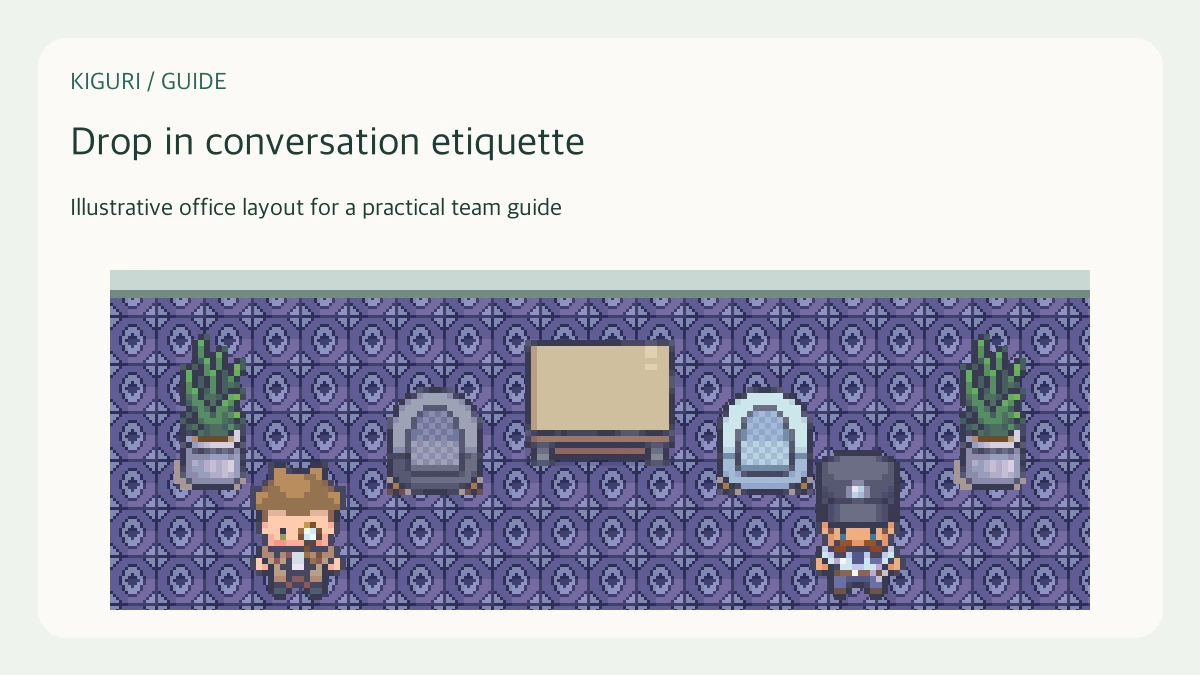
A virtual office makes it easy to notice a colleague nearby. That proximity is an invitation to ask, not evidence that they are ready for an open-ended conversation. A useful drop-in leaves the other person a simple way to say yes, defer, or choose a written reply.
State the request before starting
Begin with the subject and an honest estimate of the scope. Instead of asking only whether someone has a moment, say that you need help choosing between two headings for a draft. Mention any genuine deadline so they can decide whether a delay matters.
If you expect a detailed review, ask to arrange a session rather than presenting it as a quick question. Understating the work makes future invitations harder to trust. Avoid sending repeated prompts simply because the person's character remains visible.
Give a useful alternative
Offer a written route: a document link, the exact question, and the date you need a response. The recipient can then help without joining a call. Keep the initial message brief, but include enough information to avoid a second exchange just to discover the topic.
For example: explain which two headings you are comparing, who will read the document, and which interpretation concerns you. A colleague who cannot talk can still make a useful recommendation from that context.
Check who is part of the conversation
When somebody accepts, confirm whether the topic can be discussed where you are. If other participants are nearby, do not assume they are intended recipients. Use the team's appropriate restricted channel for confidential subjects, and check access before sharing a screen or document.
Start with the stated question. If the discussion expands into another problem, pause and ask whether to continue or schedule follow-up. Informal conversation is useful precisely because it has a low cost; allowing every drop-in to expand removes that benefit.
Close with the next step
Restate the decision, its owner, and any unresolved point. Record an important decision in the team's normal project record rather than leaving it only in a live conversation. Thank the colleague and let them return to their work without requiring another discussion.
If requests are often declined, review the timing and the size of the request. A decline may reflect focus, a different working schedule, or missing context. It does not establish that the colleague is unwilling to help.