Host a small-team retrospective that leads to one experiment
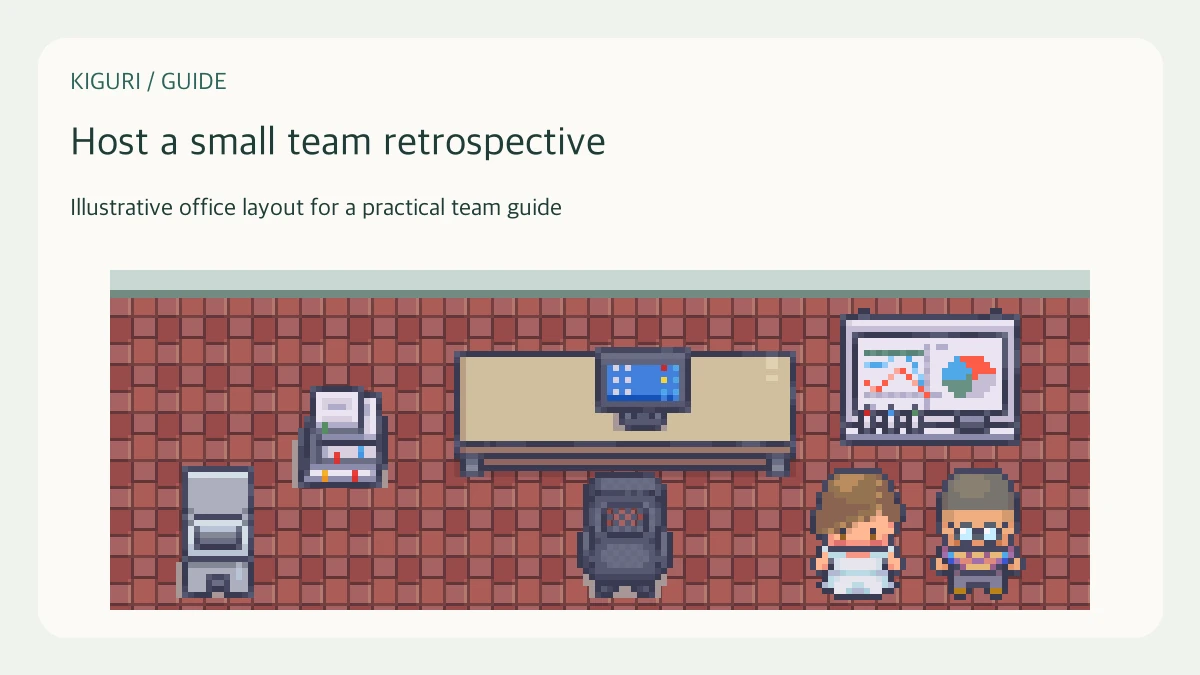
After a busy delivery, a team wants to improve how it works. A retrospective can become a list of frustrations unless the discussion connects experience to a testable change. Hold it in a space where participants can focus, but establish the conversation rules explicitly. A room label or quiet-looking corner does not by itself guarantee privacy or psychological safety.
Set the period and the purpose
Choose a specific period or piece of work. Explain that the session examines the working process, not individual worth. Ask participants to bring an observable event: a delayed answer, an effective handoff, or an unclear decision. Agree what notes will be shared outside the group and leave sensitive personal matters out of a shared surface.
Collect experiences before explanations
Allow a short writing interval and invite each person to contribute. Keep successful practices alongside difficulties so the team can recognize what it should preserve. Clarify the event and its effect before debating the cause. Someone may experience the same handoff differently from another participant; record that difference rather than deciding that one memory must be wrong.
Find a recurring pattern
Group events by the process they involve, such as review timing or ownership. Choose a pattern the team can influence. If the root problem needs a decision from elsewhere, define what evidence and request you will take to that decision maker. Avoid turning every issue into an action item; too many commitments make it difficult to learn whether any change helped.
Design one small experiment
Specify a change, the person who will coordinate it, and a date for review. For example, try sending review requests with a decision question for one working week. Decide what observation would suggest improvement and what would indicate extra burden. The experiment should be reversible and narrow enough to evaluate. It is a proposal by the team, not an automated Kiguri workflow.
Check consent and follow-through
Ask whether anyone sees a risk in the proposed change, especially people who will do the additional work. Write the experiment and review point in the team's normal record. At the next retrospective, evaluate it before selecting another. If the same complaint returns, inspect whether the experiment happened at all before concluding that the idea failed.