Host a hybrid meeting that includes the remote participants
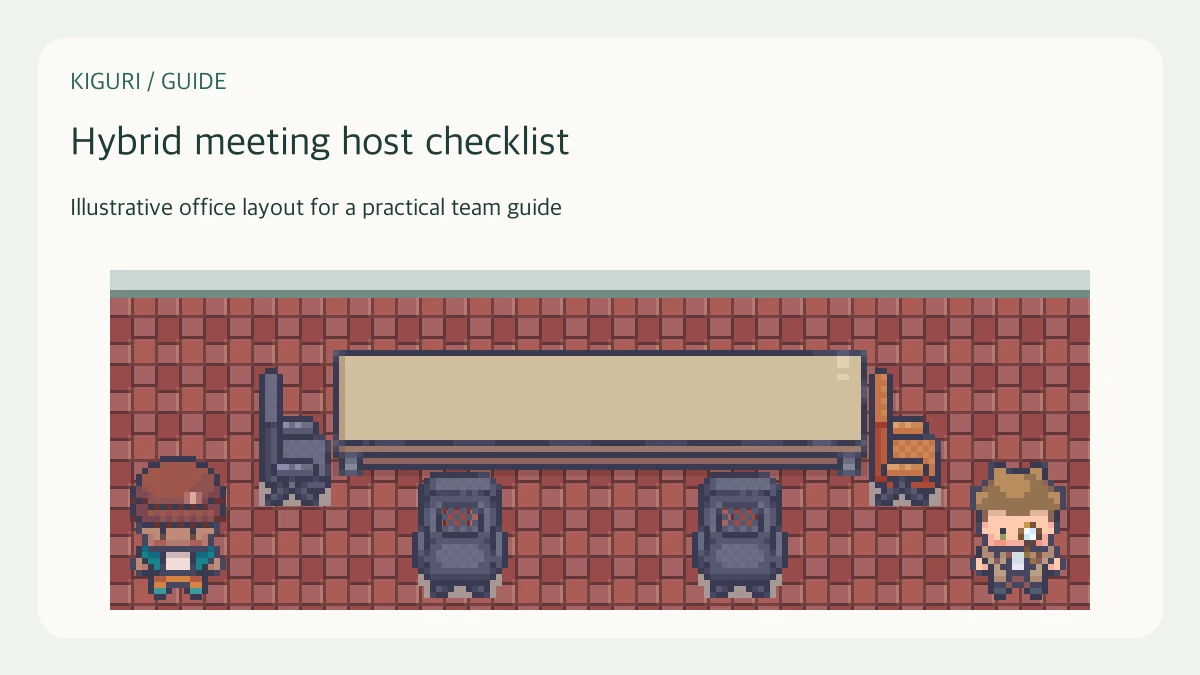
A hybrid meeting has two environments: the physical room and the remote connection. The host's job is to make them part of one discussion. A clear agenda helps, but it does not compensate for inaudible room comments or a decision made beside a screen that remote colleagues cannot read.
Test the room as a remote attendee
Before the meeting, ask a colleague outside the room to confirm that ordinary speech is audible and the shared material is readable. Use one intended room audio path. Multiple nearby devices with active microphones and speakers can create distracting feedback or competing sound.
Prepare a fallback dial-in or written route that your team already uses. This is a hosting checklist, not a claim that Kiguri supplies every room device or fallback channel. Check the tools actually available in the session.
Share material before discussion
Send the agenda and document through a place everyone can access. When somebody presents, verify what remote participants see before discussing a detail. A physical whiteboard or a local monitor is not automatically visible to them.
For example, if the meeting is choosing a release date, show the same list of constraints to everyone. Describe a change aloud and update the shared record. Do not make remote attendees infer the decision from reactions in the room.
Give remote voices a clear turn
Name a facilitator and a person to watch written questions. Pause after each topic and invite contributions from people outside the room. Prevent side conversations from becoming the real decision channel.
Round-robin input can help when a few room participants dominate, but it is unnecessary for every small update. Use it for a consequential choice or a topic where several perspectives are needed. Allow someone to pass or respond in writing instead of forcing a video contribution.
Record decisions before people leave
Restate the agreed outcome, who owns each action, and any unresolved disagreement. Put the summary in the shared project record while participants can correct it. Confirm the next date using an explicit time zone when attendees work in different locations.
If remote colleagues regularly ask what was decided, inspect the meeting process rather than telling them to pay closer attention. Check audio, visibility of materials, turn-taking, and where informal decisions occur. The meeting succeeds when participants can act on the same result regardless of where they sat.