Make a virtual office event easy to follow
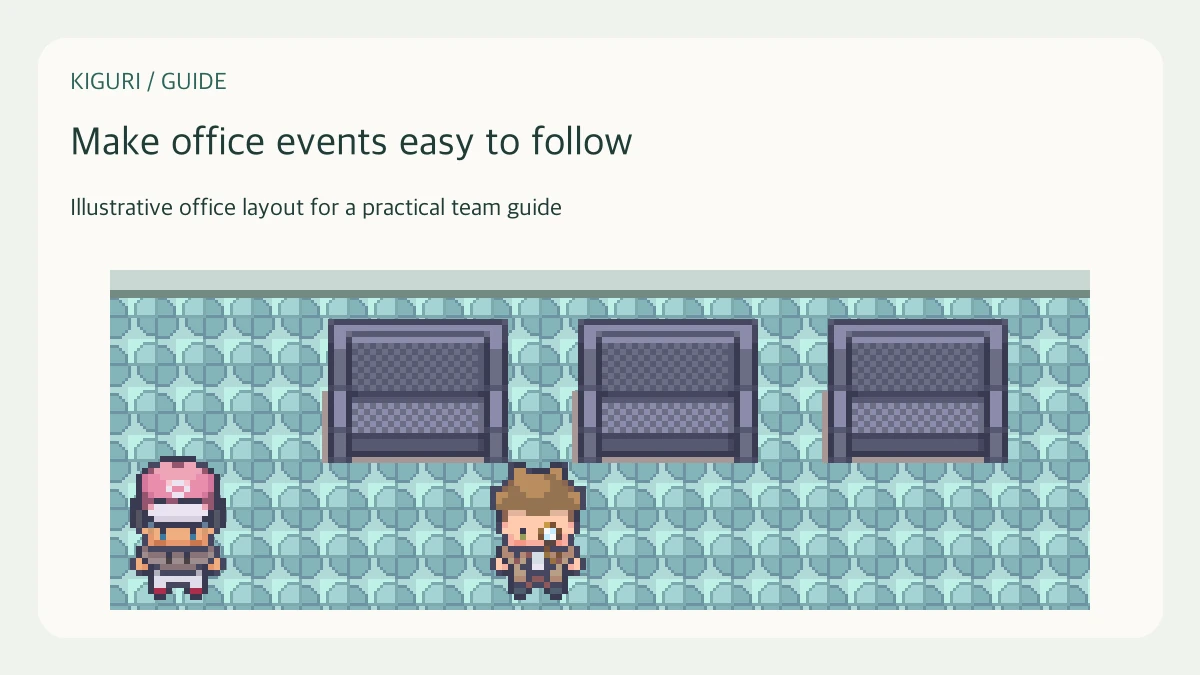
An office event is easier to follow when participants know what is happening now and what they should do next. A lively map cannot substitute for that information. Plan the event around a small sequence, then use the space to support that sequence rather than asking attendees to discover the agenda by wandering.
State the activity and the expected contribution
Suppose you are hosting a short project showcase. Explain whether attendees should listen, ask questions, or bring an example. Give the start time, expected finish, entry route, and suitable help channel. State whether video is optional. Avoid assuming that a participant who enters late already knows which part of the activity is underway or where the group has moved.
Design a small number of transitions
Choose a welcome point, presentation spot, and optional discussion area. Tell attendees the order before moving the group. Keep the route simple enough for someone using a smaller screen to follow. Every extra destination adds an opportunity to lose people, so move only when the new location supports a distinct part of the event rather than merely showing more of the office.
Give the host a visible script
Prepare short announcements for starting, changing activity, handling questions, and closing. Put important directions in a readable team channel as well as saying them aloud. A participant who cannot hear the call should still know the next destination or task. Use actual available product controls, but do not promise automatic agenda advancement, announcements, or attendance tracking unless those capabilities have been verified.
Prepare for an interrupted sequence
Decide what happens if the speaker cannot connect, the group cannot find the room, or discussion runs longer than expected. A fallback might be a shared written outline and an established meeting channel. Tell people explicitly when the plan changes. Keep one helper available for navigation issues so the presenter does not have to stop every time someone needs individual assistance.
End with a usable follow-up
Summarize the decision, questions still open, and where materials will be stored. Ask whether attendees understood the transitions rather than only whether they liked the room. A structured sequence can feel less spontaneous, but it makes participation easier for newcomers and late arrivals. Leave optional conversation time after the planned close, while making it clear that people may leave without missing the promised result.