Set interruption rules for an open virtual office
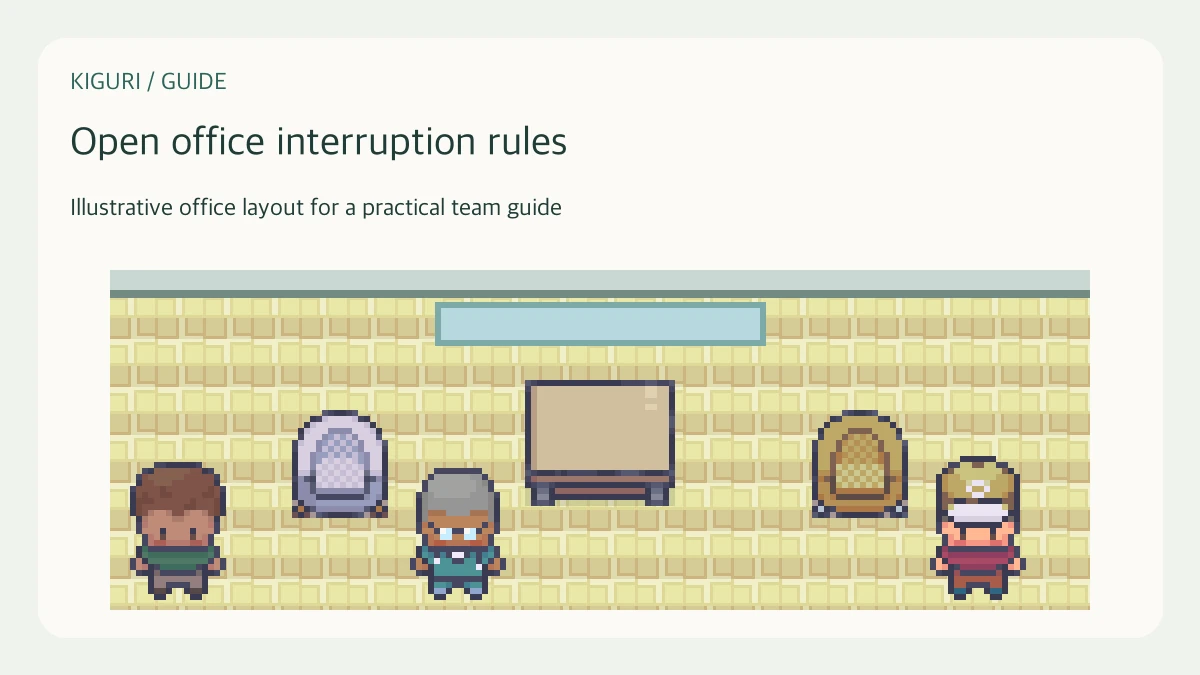
An open office can make colleagues easier to find. Without a few shared rules, it can also make every visible person seem available for immediate help. Decide how people should interrupt before a busy period turns spontaneous conversation into the default route for all work.
Sort requests by what they need
Use three ordinary categories: a written question that can wait, a conversation that needs an agreed time, and an urgent issue with a real consequence. Include examples from your team's work rather than an abstract priority scale.
For example, asking which template to use can usually wait. Resolving conflicting feedback may need a short appointment. A current delivery failure may justify contacting the designated responder immediately. Explain who decides when a request belongs in that final category.
Ask before expanding a conversation
For a drop-in, state the subject and ask whether now works. If the person declines, leave the useful context and the actual deadline. Do not walk to another visible colleague merely to bypass the team's agreed ownership process.
When a conversation grows beyond the original question, ask whether to continue. This protects both participants from an informal request becoming an unplanned review session. The rule should apply to senior colleagues as well as new teammates.
Make a predictable help route
Provide an existing channel, a named owner, or a scheduled help window for common questions. Write where the authoritative answers live. If every request depends on knowing who happens to be online, newcomers and people in other time zones receive worse support.
Scheduled help reduces interruptions but may delay a small question. Let people use written requests between sessions, and define a backup for genuine blockers. Avoid replacing constant calls with an expectation that one person continuously watches every channel.
Review the cost of the rule
Ask whether important requests were answered and whether people could finish concentrated work. Use concrete examples of delays and interruptions. Visible office activity is not a reliable measure of either outcome.
If one teammate handles most informal questions, distribute that responsibility or improve the underlying documentation. If people label ordinary work urgent, revisit the examples and consequences. The goal is an office where help remains approachable and attention remains predictable; changing the room layout alone cannot create that agreement.