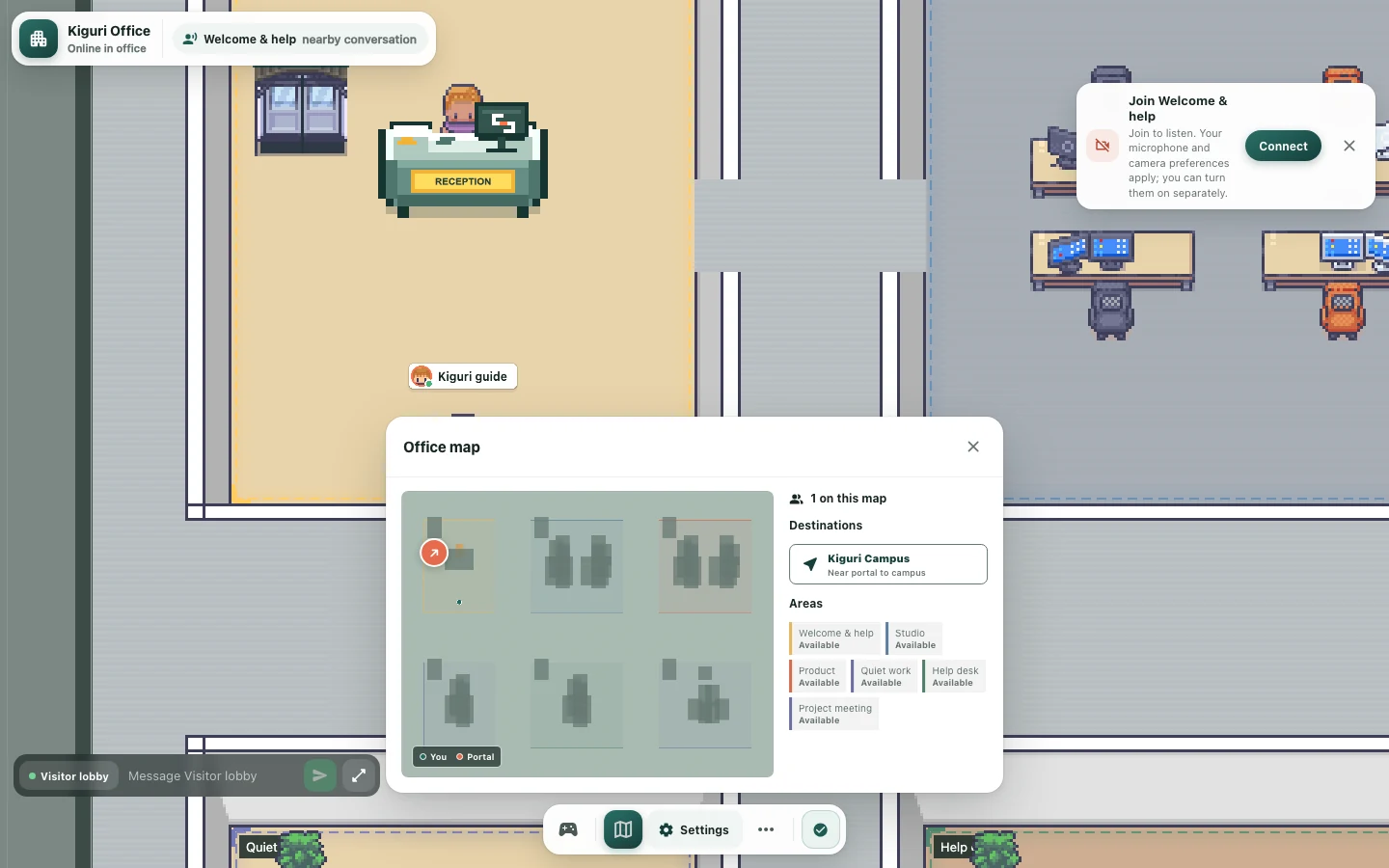
Organize an internal virtual-office open house
An internal open house lets colleagues explore a workspace and meet the people who use it. Unlike a formal tour, visitors may arrive at different times and want different levels of detail. Plan a few clear entry points rather than a continuous presentation. The event structure described here is a hosting practice, not a built-in registration or crowd-management feature.
Choose what visitors should discover
Pick two or three things worth showing, such as the workspace layout or a team's working routine. Avoid filling every corner with an activity merely because space is available. Write a short invitation explaining the time window, access route, and whether devices are optional. Offer an alternative way to learn about the office for colleagues who cannot attend.
Assign visible host responsibilities
Name an arrival host and a host for each activity. Agree who will answer access questions and who can pause a demonstration. Give hosts the same basic description of the event so visitors receive consistent instructions. Keep an accessible text version of the route outside the game space; a visitor with a loading problem still needs to know where to ask for help.
Prepare short repeatable activities
Design each stop to work for someone arriving halfway through the event. A brief explanation followed by a question is easier to repeat than a long presentation. Where an interactive object is part of a stop, verify it with another participant beforehand. Provide a demonstration alternative if the interaction is unavailable. Do not treat decorative furniture as evidence of a working activity.
Leave room for unstructured visits
Separate hosted activities from a place where people can talk or simply look around. Explain when a visitor should wait and when they can continue independently. An open format encourages exploration but makes it harder to ensure everyone hears the same information. Address that tradeoff with a short written overview rather than repeatedly interrupting informal conversations.
Check the event from a visitor's perspective
Before opening, ask a colleague to enter using the intended route and find a host without coaching. If the host's role is unclear, improve the invitation and spoken welcome. Afterward, collect a few specific questions that remained unanswered. Use those questions to improve the next event instead of claiming success from the number of connected avatars.