Place a whiteboard where people can gather without blocking a path
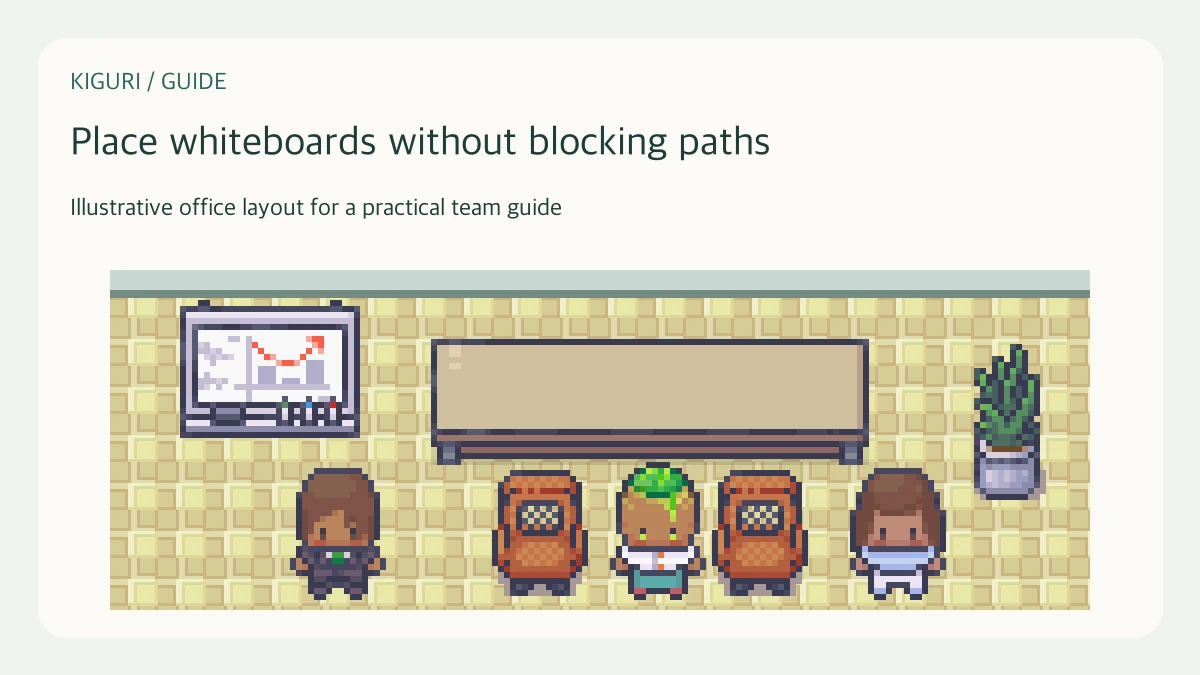
A board is easiest to use when people can reach it and gather nearby without standing in the main walkway. Think about the space in front of the board, not just the wall behind it. These placement practices apply to a discussion corner; actual drawing requires a verified interactive whiteboard.
Choose the discussion focus
For a brief planning session, decide whether the board is the main focus or a supporting surface beside a table. Place it accordingly. A board behind a dense row of desks may look like office decoration rather than somewhere to gather. If people must reach the object to open its controls, the approach needs to remain practical as well as visually sensible.
Reserve the gathering space first
Leave an open area in front of the board before adding seating or side furniture. This area should branch from the shared route rather than become the shared route itself. Picture someone walking past while another person stops to inspect the board. If both movements demand the same narrow strip, move the board farther into the corner or reduce nearby furniture.
Keep the board visible
Avoid covering its upper edge with a tall plant or placing a cabinet across its lower portion. Look at the artwork at normal scale and check that the object reads as a complete board. Leave visual separation between adjacent wall objects. Several nearly touching frames can make it harder to distinguish the board from a decorative picture or empty panel.
Check the actual interaction
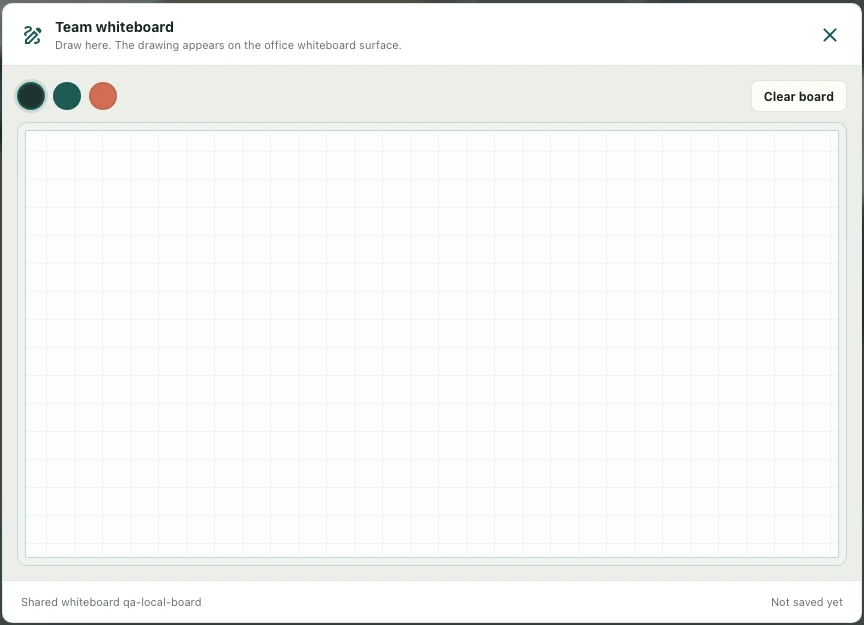
A board-shaped image does not establish drawing support. Approach the intended object in play and verify whether it opens the actual whiteboard interface. Test with a small mark in an appropriate review session rather than assuming the promotional scene proves behavior. If the object is decorative, keep the layout useful but describe it as decoration, not a shared drawing surface.
Rehearse a group approach
Walk in from the entrance, stop near the board, and move back toward the office route. Try a second approach from the table if one is present. Inspect whether character positions or nearby furniture obscure the board in the playable view. If the gathering area feels cramped, remove a side prop first; adding another board will not solve the access problem.