Plan a quiet reading corner without making false privacy promises
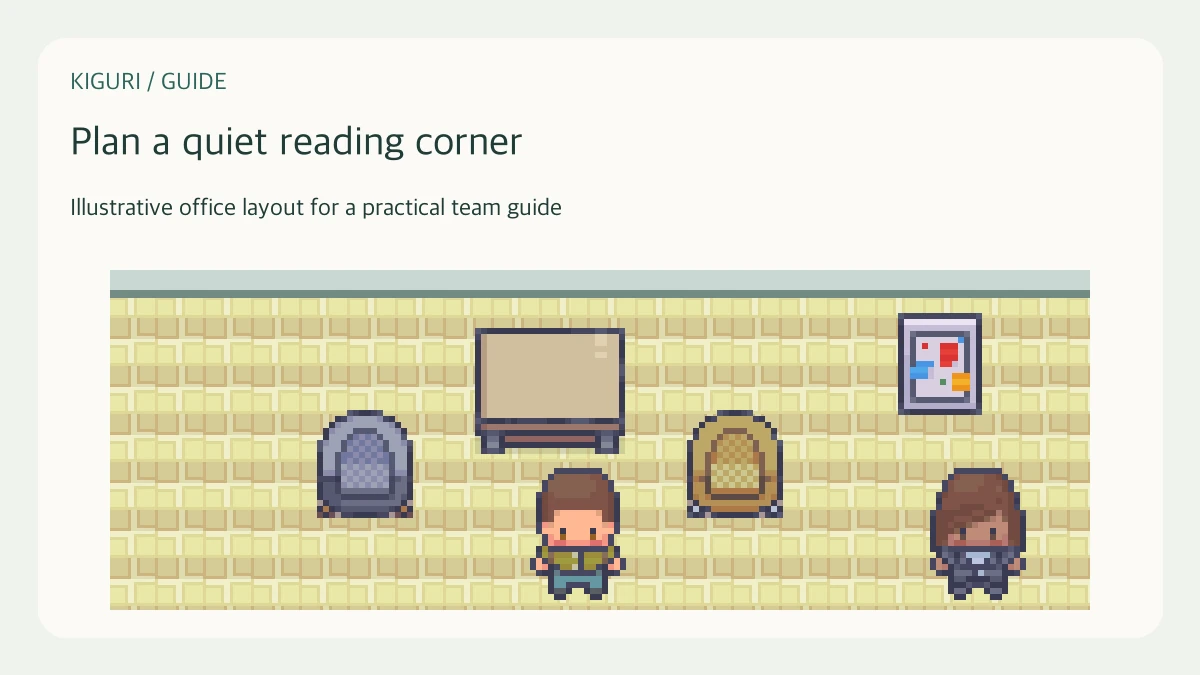
A reading corner can offer a recognizable place to pause and review notes. Its layout should make that intention clear without pretending decorative furniture creates privacy. Plan the visual setting first, then check any actual quiet-area behavior separately in the workspace where the corner will be used.
Pick a low-traffic location
Imagine someone reading a short proposal before joining a discussion. Put the corner away from the route between the entrance and the main meeting area. Avoid placing it at a mandatory turn where every visitor will pass close by. A peripheral location is useful only if it remains reachable; do not bury the corner behind a sequence of cabinets.
Keep the arrangement modest
Use one or two seats, a small supporting table, and a recognizable boundary such as a wall edge or shelf. Check what each asset actually depicts. An empty cabinet should not be described as a stocked bookshelf merely because its catalog label suggests one. Complete, clearly separated furniture is more convincing than a crowded collection of props with uncertain roles.
Preserve an open approach
Leave a visible route from the shared path to the corner. Put tall furniture behind the seating rather than across its entrance. Walk in, turn toward the intended stopping point, and walk out again. If the chair is configured for sitting, test that behavior as well. A reading nook that is easy to locate but awkward to leave is unfinished.
State the quiet expectation honestly
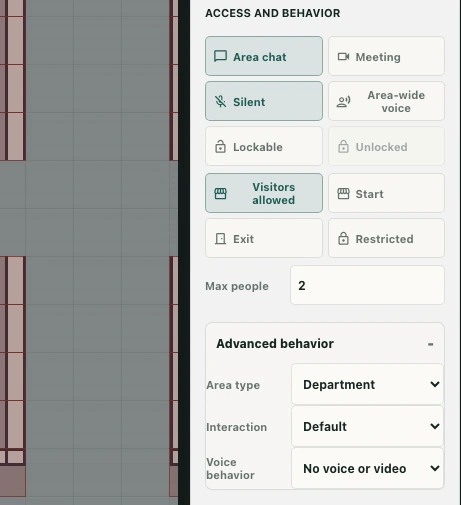
Tell colleagues how you intend the area to be used: for example, review notes here and move to the meeting corner for discussion. If the workspace offers a quiet-area setting, verify its actual boundary and behavior before describing it. Avoid claims about soundproofing, confidential conversations, or distraction blocking that you have not established through the available controls and a controlled test.
Review the view at normal scale
Inspect the nook from the playable camera and on a smaller screen. Can a visitor distinguish the seat, approach, and surrounding route without inspecting individual pixels? Remove decorative clutter if those elements blend together. Ask someone unfamiliar with the map where they would stop to read. Their answer should point to the intended corner rather than an unrelated chair beside a corridor.