Agree on quiet hours before relying on a quiet room
A quieter area can help a team separate conversation from concentrated work. It cannot decide which requests deserve an interruption. Quiet hours need a social agreement about timing, exceptions, and how to reach somebody when waiting would cause a real problem.
Define a modest starting window
Choose a window that overlaps the working hours of the people involved. State the time zone and the days it applies. Explain whether the agreement covers routine meetings, spontaneous calls, or both. Start with a schedule the team can sustain rather than protecting the entire day.
For example, a small team could reserve the first ninety minutes of its shared morning for drafting and review. People working in another time zone need an equivalent arrangement, not an instruction to be quiet during their only overlap.
Explain the interruption rule
Write two or three examples of requests that can wait: a status question, optional feedback, or a link someone can read later. Define urgency in terms of consequences, such as a current service incident or a decision blocking today's delivery.
Choose an existing urgent contact route and a backup person. Do not ask everyone to watch every channel during protected work. That would preserve the appearance of quiet while keeping the same interruption load.
Use the space as a reminder
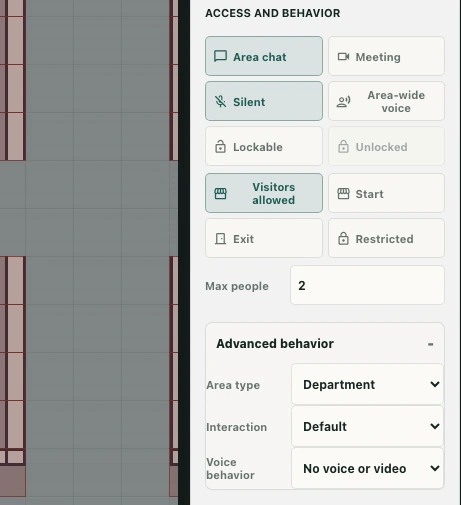
Agree on a quieter destination in the virtual office and explain what being there means. If the workspace uses configured conversation areas, test their behavior separately from the agreement. A technical audio boundary and a team's permission to interrupt are different things.
A colleague can remain reachable while working quietly. Avoid interpreting presence, a seated character, or a status label as proof that they have seen a request. Send routine work through the agreed asynchronous channel with enough context to answer later.
Review missed requests and exceptions
After a trial period, ask whether important work was delayed and whether people gained uninterrupted time. Inspect specific incidents: what happened, why it was urgent, and whether the contact route worked. Do not judge the arrangement from visible activity alone.
If exceptions become routine, change the hours or assign a rotating responder. Protecting focus shifts some availability to another person, so make that responsibility explicit. Keep the agreement short enough that a new teammate can apply it without interpreting an unwritten office culture.