Run a project kickoff in a virtual office
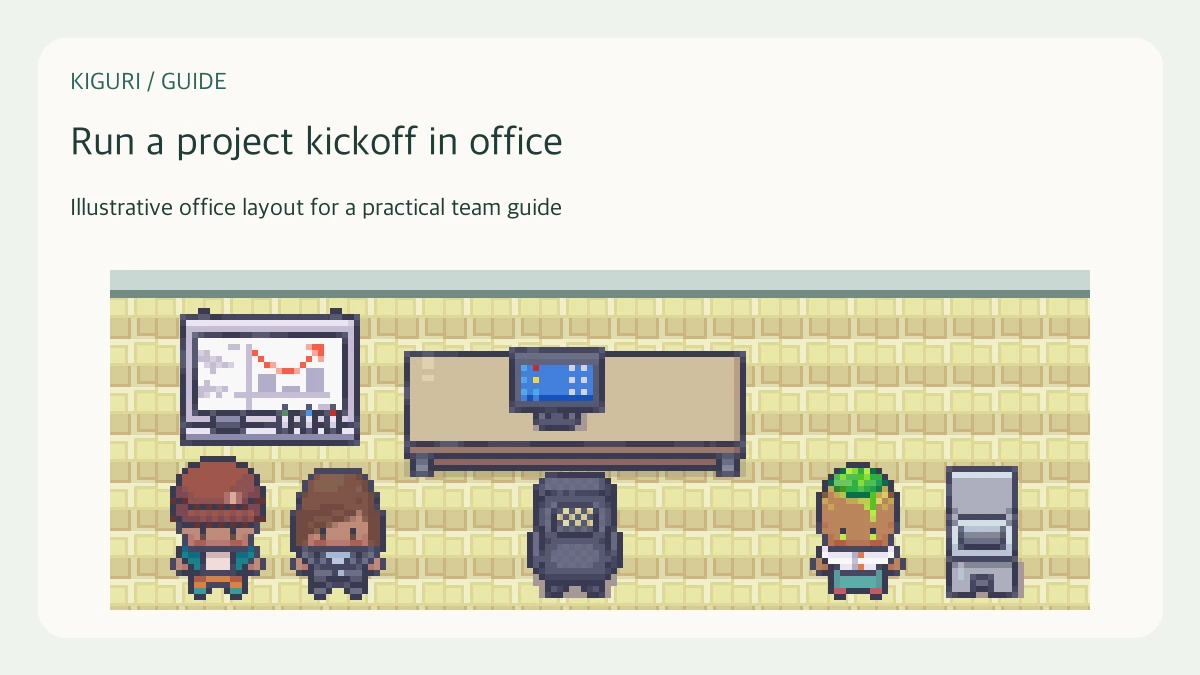
A small team is beginning a project with contributors from several disciplines. Everyone has read a different fragment of the plan, so agreement cannot be assumed. A virtual office gives the group a place to meet; the kickoff still needs a clear purpose and a written outcome. Treat this session as the beginning of coordination, not as proof that the whole project is settled.
Send a compact starting brief
Before the meeting, share the problem, the intended beneficiary, and the proposed outcome in a document people can access. Include known constraints and unresolved questions. Ask participants to identify a dependency or risk rather than simply acknowledge receipt. State what the kickoff must decide and what will be discussed later so preparation does not become a second project.
Establish the boundaries together
Start by having someone other than the organizer describe the project in their own words. Correct differences in understanding before reviewing tasks. List the work that belongs in the first milestone and the work explicitly deferred. A short boundary discussion can prevent people from preparing deliverables for different versions of the project. Keep the wording concrete enough to recognize when scope changes.
Map responsibilities and dependencies
Name a person responsible for each immediate deliverable and identify who can make decisions about it. Separate providing advice from approving work. Ask what each contributor needs from someone else before they can start. Record dependencies with dates that both sides can inspect. Do not infer agreement from a silent participant or from an avatar remaining in the room.
Choose the first visible milestone
Agree on a result small enough to review soon: a tested outline, a prototype, or a documented investigation. Define what reviewers will look for and where the result will be recorded. A detailed long-term schedule may create false confidence when key questions remain open. Use the first milestone to reduce those uncertainties before committing to more precision.
Close with a disagreement check
Read back the owners, the milestone, and the unresolved decisions. Ask what would make the plan fail in the next week. Give participants a route to raise concerns after the meeting if they could not speak comfortably during it. Share the written recap through the team's existing channel; do not assume the meeting space automatically produces minutes or reminders.