Run an informal learning session with an achievable exercise
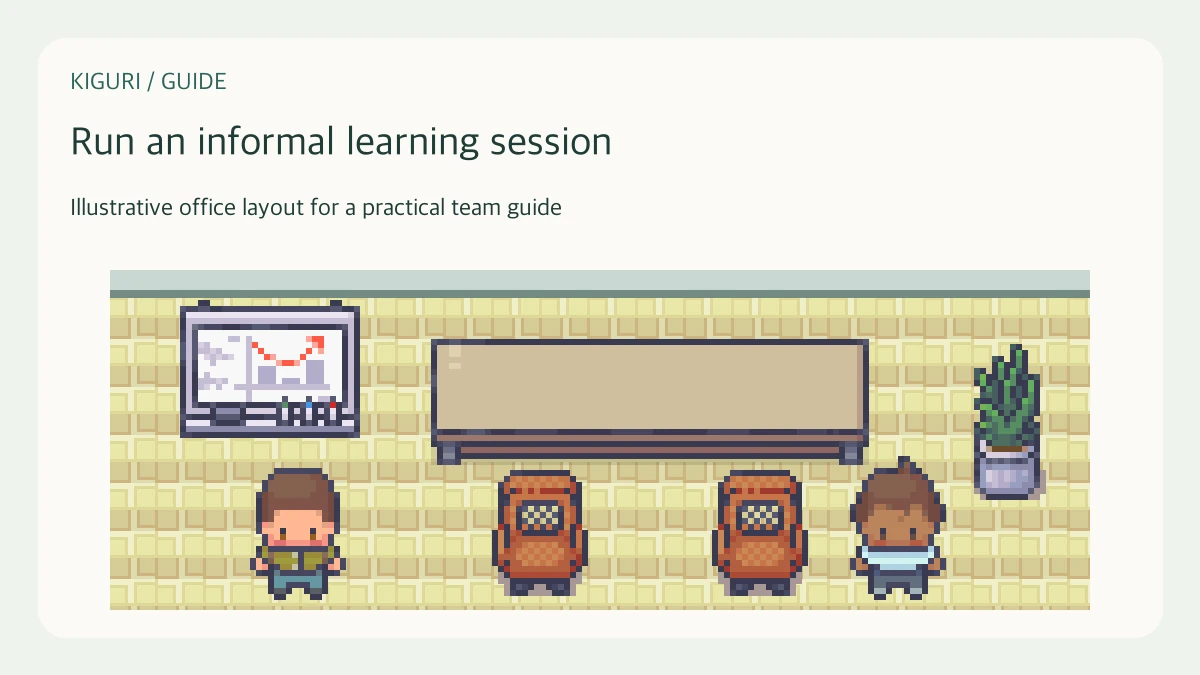
A colleague offers to teach a small group a technique they use every week. An informal session can be friendly without being unstructured. Choose a task people can attempt during the available time and prepare for different levels of experience. A virtual office can host the gathering, while materials and practice records can remain in tools the team already uses.
Define the learner's task
Finish the sentence: after this session, participants should be able to do this specific thing. Choose something observable, such as explain a diagram or prepare a review request. List prerequisites and send a small example in advance. If the task requires software access, check that access before the session rather than spending the entire meeting on installation or permissions.
Explain through one worked example
Show the starting point, describe a decision, and demonstrate the result. Use plain terms and pause when a term is unfamiliar. If a live demonstration depends on sharing a screen, confirm reception with another participant where that feature is available. Keep a static example ready. The quality of the lesson should not depend on a single successful media connection.
Make room for an independent attempt
Give participants a related task that changes one meaningful detail. Let them work before explaining the answer. Accept a question in writing as well as aloud. For a mixed-experience group, prepare an optional extension rather than making beginners rush to keep pace. Avoid asking people to reveal private work merely to provide an example.
Review the reasoning together
Invite volunteers to describe their approach and where they became uncertain. Discuss the decision that matters, not only whether their output matches yours. Show an alternative when more than one approach is valid. A small group discussion provides depth, but a larger group may need fewer examples to keep the session within its promised time.
Leave a path for later practice
Share the exercise, a worked answer, and one place to ask follow-up questions. Ask participants what they would try next without the instructor present. If nobody can name a first step, reduce the lesson's scope and repeat that part. Do not treat attendance or a visible avatar as evidence of learning; the independent attempt is the more useful check.