Run an internal workshop with a human interpreter
Agree on the task and the relay
An internal workshop can need interpretation even when everyone has a working connection. Plan how instructions, questions and answers will reach the people using each language. The interpreter needs a defined place in that exchange, while the facilitator remains responsible for the task and its scope.
In this fictional example, participants prepare a review request from picture cards C1 and C2. The instruction is to select C2 and ask whether its text label is readable. The presenter and some participants use different spoken languages; a consenting human interpreter relays both ways. This is a planned practice exercise, not a report of completed interpretation or participant results.
Name the facilitator and interpreter, confirm the language directions, and agree on recognizable pause and completion signals. Do not silently assign the role to a bilingual attendee. Check that the agreed communication route works for the people involved before depending on it.
Brief the interpreter with the same materials
Give the interpreter the materials beforehand, explain acronyms and unfamiliar terms, and leave time for questions. During the session, use clear speech at a manageable pace, one speaker at a time, with pauses. Preparation reference: W3C WAI, Making Events Accessible.
For this exercise, share the same version of C1, C2 and the task instruction with everyone who needs them. Name C2 explicitly instead of pointing at that picture. The interpreter can flag an unclear reference before the workshop begins; the task owner supplies the meaning rather than asking the interpreter to invent it.
Keep a small run sheet with the material version, roles, completion signal and fallback. Rehearse one instruction and a question with its reply. The rehearsal checks the proposed exchange, without proving that every later statement will be understood.
Finish the question before answering it
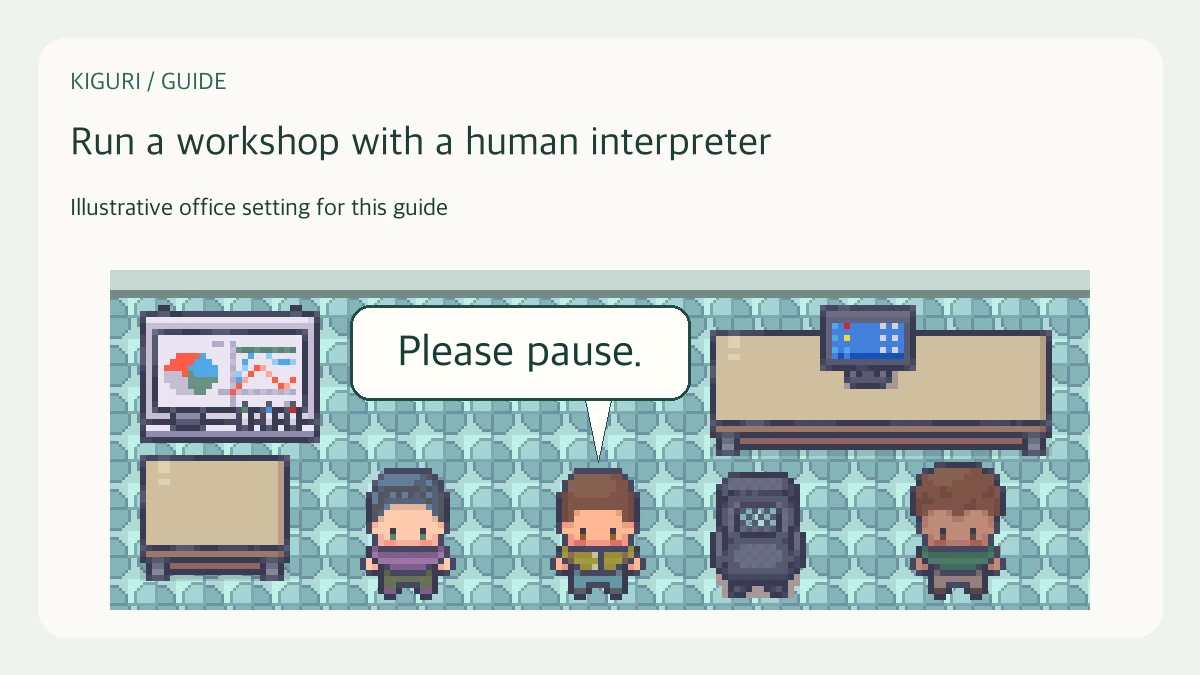
The presenter gives the C2 instruction and stops. The interpreter relays it, then signals completion through the agreed method. Only then does the facilitator invite a question or begin the attempt.
Suppose a participant asks whether color feedback is also required. Let the interpreter finish relaying that question before the presenter answers. The presenter explains that this task concerns label readability and color feedback is optional. Allow that answer to be interpreted before resuming practice. An answer heard only by the presenter’s language group leaves the exchange unfinished.
Keep side comments inside the same turn process. A fast conversation between two colleagues can otherwise become the place where the task changes while others are still waiting for its earlier instruction.
Pause when the meaning or connection breaks
If contrast is unclear, use the pause signal. The presenter explains the intended comparison between the label and its background, then restates the full instruction. Let the interpreter relay the clarification and invite another question before continuing. Record any unresolved wording beside the affected segment.
If the interpreter disconnects, stop the part requiring interpretation. Use a previously agreed written route only after confirming that its language works for those affected; otherwise defer that part. Reduce the material covered rather than quietly dropping questions in one direction.
Close through the same relay
Invite a participant to prepare the fictional request: C2, a label-readability question, and any remaining color question. Let them explain one choice through the interpreter, or use an agreed written alternative or pass. Check the intended task rather than judging language proficiency.
Relay the closing instructions and unresolved questions before people leave. Retain the source version, covered segments and follow-up owner in the run sheet. Attendance, silence or a completed-looking document does not establish accurate interpretation. These are human workshop arrangements; no automatic translation, recording or separate language channel is assumed.