Lay out a small-team standup for a short discussion
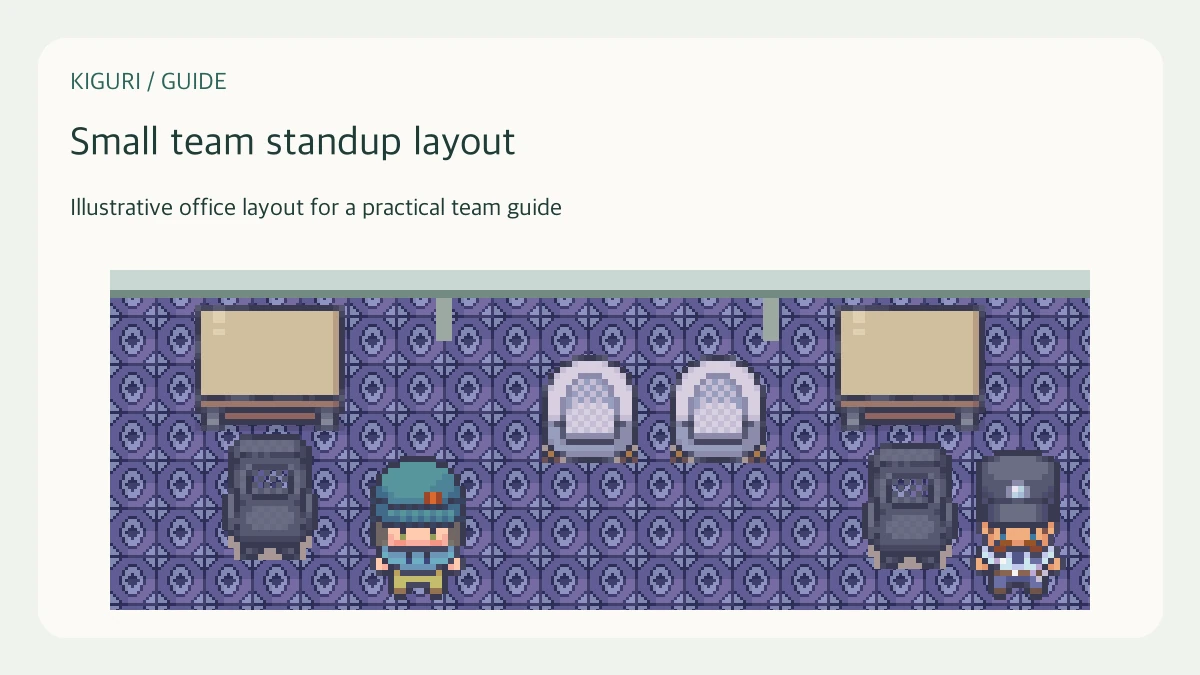
A daily standup needs a place people can find quickly and a format that makes blockers visible. It does not need a large conference room or a detailed tour. Design the gathering around the number of expected participants and the work they need to coordinate.
Pick a simple gathering point
Choose a landmark away from a busy doorway or narrow passage. Tell the team where to meet using a short description they can recognize on the map. Check that arriving participants can approach without crossing furniture or another meeting.
If you provide chairs, leave room to reach and leave them. Test the route with the controls people actually use. Decorative furniture is not proof that a seat is usable, and a visually crowded circle can make a small group harder to read.
Keep supporting material close
Use a project document or task view as the authoritative list of work. The virtual gathering spot supports conversation; it should not require everyone to reconstruct progress from objects on the map.
For example, a four-person team could review today's delivery, one dependency, and a blocked review. Link the relevant item when a blocker appears. Avoid using the standup to read every task aloud when people can already inspect the list independently.
Set a short speaking structure
Ask each person for the work that affects others, what changed, and what help is needed. Allow a written contribution when someone cannot attend. A round of status reports is less useful than identifying the dependency that would otherwise surprise the next person.
When a technical debate begins, record who needs to continue and move it to a separate discussion. Cutting off detail can feel abrupt, so explain that the question matters and give it an owner. Keep the rest of the team from waiting through a problem they cannot help solve.
Test arrival and the outcome
Before making the spot permanent, run a normal session and check whether late arrivals can find it without interrupting. Observe whether participants can access the supporting document and hear the intended discussion in their actual setup.
Afterward, confirm that every blocker has a next action. If the same unresolved issue returns each day, change the escalation process rather than enlarging the gathering space. Review attendance needs as the team grows; a layout suited to four people may not support a larger group's discussion or leave a clear passage.