Guide a late arrival with short text directions
Establish where the person is
When a teammate arrives after a discussion has started, do not begin with a full set of directions. Ask for their current landmark and the destination they need. A person already near the meeting area needs a different instruction from someone still at the entrance. Assign one helper so several hosts do not send conflicting routes at once.
For example, a reviewer might arrive while a presenter is answering questions. The helper can guide them in text while the presenter continues. This is a coordination practice, not a claim that Kiguri automatically assigns a guide or computes directions.
Send one recognizable step
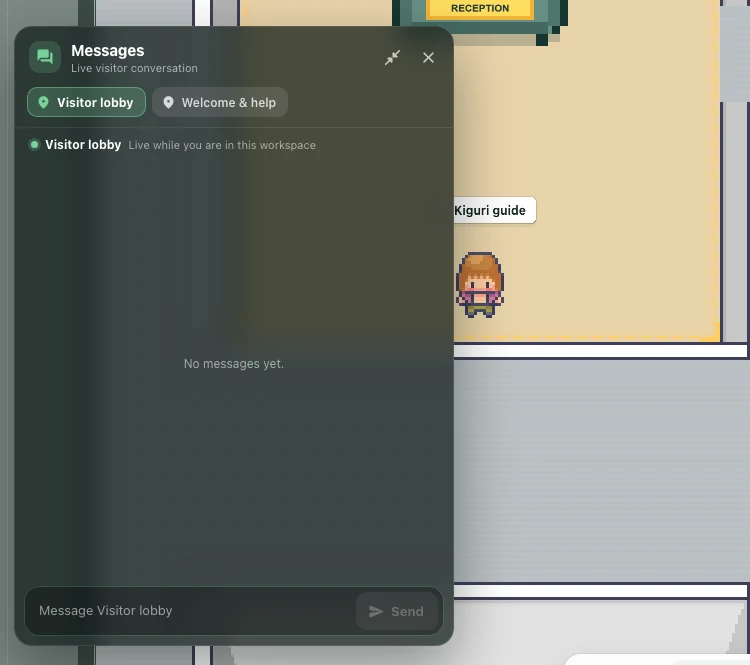
Use a visible landmark and one action: walk toward the reception desk, then stop beside it. Avoid a long sequence of turns that depends on the helper's current camera view. Describe the destination with terms the visitor can recognize, rather than an internal room name they have not learned.
Stop your own character while writing so your reference point stays clear. Check the intended conversation before sending directions. Do not include private meeting material merely to explain where the room is; navigation instructions should reveal only what the recipient needs to reach an authorized destination.
Wait for acknowledgment before continuing
Ask the visitor to confirm the landmark before sending the next step. If they report an obstacle, ask what is visible and which movement they attempted. A screenshot of the relevant area can help, but avoid requesting unrelated browser or account contents.
Text guidance is slower than taking over the route, but it helps identify the actual confusion. If two attempts fail at the same point, change the meeting point or offer a simpler path. Repeating identical instructions more loudly will not open a blocked passage or resolve an ambiguous landmark.
Rejoin the discussion with context
Once the person reaches the meeting, give them the current question and the shared document reference. Do not replay the entire presentation unless their contribution requires it. If a decision is already provisional, say so and explain when they can add their response.
After the session, record the confusing turn and improve the next invitation. Check whether a shorter route description would have prevented the delay. The useful result is not merely that the visitor arrived; they should reach the right activity without interrupting everyone else or missing the context needed to participate.