Run office hours with a clear purpose
An open help session can remove small blockers without adding meetings for every question. It works best when people know what belongs in the session and what happens if several colleagues arrive together. Treat office hours as a team agreement, not a promise that somebody is always available.
Define the questions you can answer
Choose a narrow purpose for the first session: design feedback, technical triage, or help finding the right owner. Name the host and publish a time window with an explicit time zone. Include a place to submit a question beforehand and a fallback for someone who cannot attend.
For example, a project lead might offer thirty minutes on Tuesday for questions about the upcoming release. A full architecture review needs its own appointment; a request to identify a reviewer fits the help window.
Make the arrival process visible
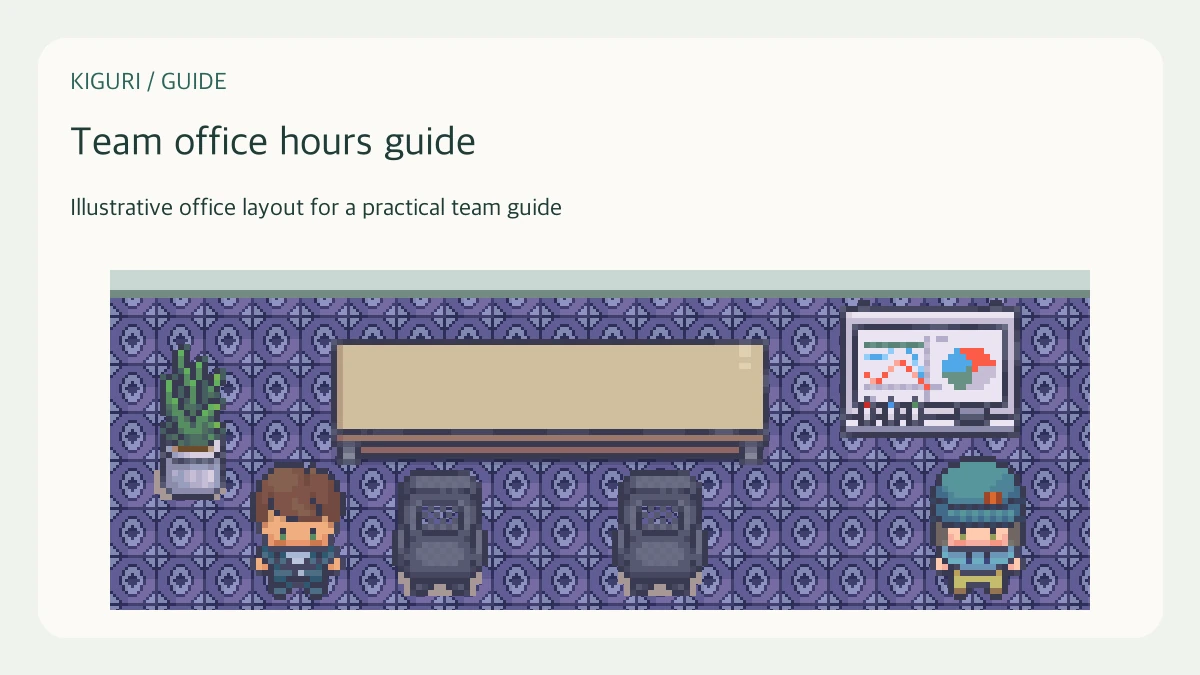
Pick a recognizable meeting spot with an unobstructed approach. Tell attendees how to indicate they are waiting. A shared text list in your usual document is enough: name, short question, and whether follow-up is needed. Do not rely on avatar position to establish an exact queue.
Ask whether the question is suitable for everyone present before discussing details. Move confidential subjects to an appropriately restricted channel. A public help corner is convenient, but convenience does not establish who may hear sensitive information.
Keep each turn useful
Begin by asking what the person is trying to do and what they have already checked. Offer a next action rather than an unbounded investigation. If the issue needs another specialist, record the owner and the next contact instead of holding the queue while searching.
Time limits protect waiting colleagues, but rushing can discourage people from raising a genuine problem. Allow a brief clarification, then explicitly arrange a longer follow-up when necessary. Keep the queue informed if the session must end early.
Review the unanswered work
After the session, mark which questions were resolved, handed off, or left unanswered. Send those results through the team's existing communication process; a conversation in the office is not a durable task record by itself.
If the same question returns every week, improve the written instructions or change the underlying process. If no one attends, ask whether the purpose, timing, or host was unclear before adding more sessions. A useful office hour reduces uncertainty without becoming another standing obligation.