Lay out a virtual reception desk that helps visitors orient
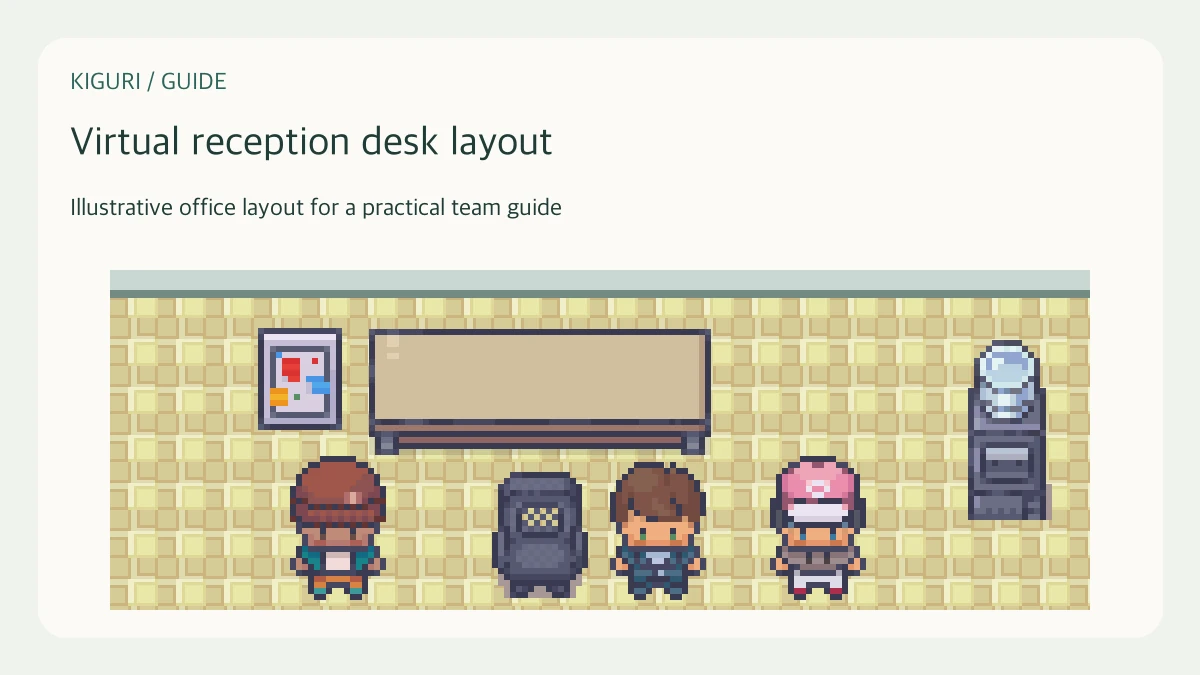
A virtual reception desk is useful when it explains an arrival sequence. It can show where to pause and where to continue, even when no receptionist is present. Treat it as a spatial cue unless the specific object has a verified function; decorative reception furniture does not automatically check visitors in.
Decide what reception should explain
Suppose a guest is joining a workshop and should wait briefly before heading to the training area. The desk needs to distinguish the waiting spot from the onward route. It does not need to resemble a complex front office. Write the intended arrival sequence in plain language, then choose the smallest arrangement that can make that sequence visible.
Place the desk beside the route
Orient the counter toward the expected approach while leaving a clear path past it. Avoid creating a compulsory zigzag around the desk before a visitor can see the rest of the office. Keep the complete counter artwork visible, especially its front and upper edges. Large decorative objects should not conceal the part that makes the desk recognizable from the arrival direction.
Give waiting a distinct location
Put a compact seating or standing area near reception but outside the through route. A visitor should be able to pause without occupying the only opening to the workshop. If you intend seats to be usable, test their actual behavior. Keep their approach separate from the desk's back side so the waiting area does not look like staff workspace.
Provide one reliable onward cue
Choose a destination landmark that can be described simply, such as the training tables beyond the counter. Keep the route toward it open and avoid competing decorative accents along the opposite wall. Do not promise automated guidance or visitor routing unless those functions are actually available. A short invitation with a recognizable landmark is enough for many small offices.
Rehearse the visitor journey
Start where a guest would arrive, pause at the waiting spot, and continue to the workshop. Then reverse the route. Check whether any cabinet, plant, or chair hides the next step as the camera moves. Ask a tester where reception ends and the route begins. If the answer is unclear, reposition the desk or remove a competing prop before expanding the scene.